



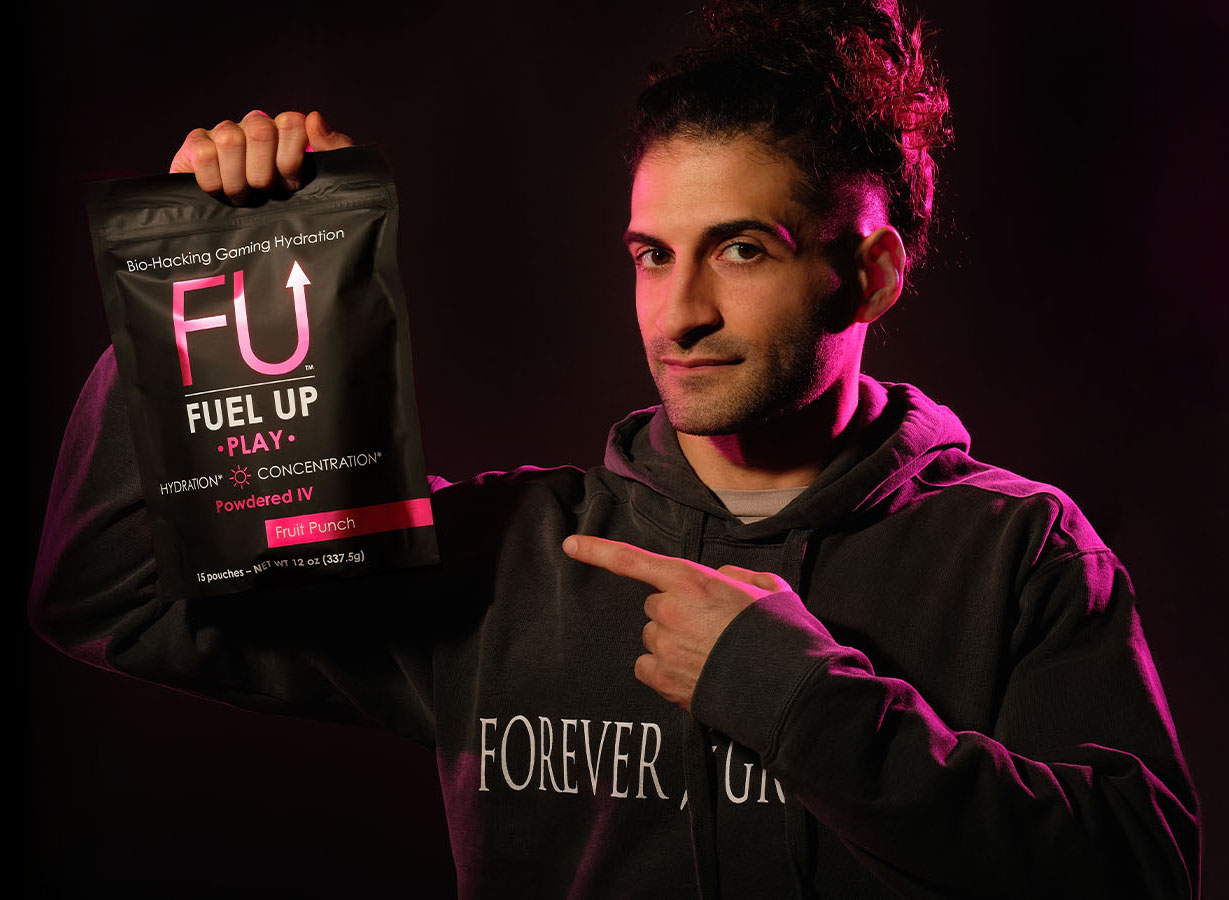
"As someone who is all about health and wellness, I couldn’t be happier with Fuel Up! The flavor is amazing, the ingredients are sound, and I’m looking forward to checking my hydration levels after a few more months of consistently taking “Play” and seeing how I can become even more optimal as a human being. As a professional gamer, hydration is super important for long days of practice prior to a tournament and this is the best product on the market… SO FUEL UP!"
Dehydration is bad for bodies. Being just 2% dehydrated can impair physiological and performance responses. Unfortunately, most people are unaware that they critically dehydrated because being thirsty means the body is already dehydrated. 1
Even normal daily life can cause dehydration. Now, compound that with high stress, overindulgence, competitive activities, illness, and fatigue, and it's a physiological disaster waiting to happen.
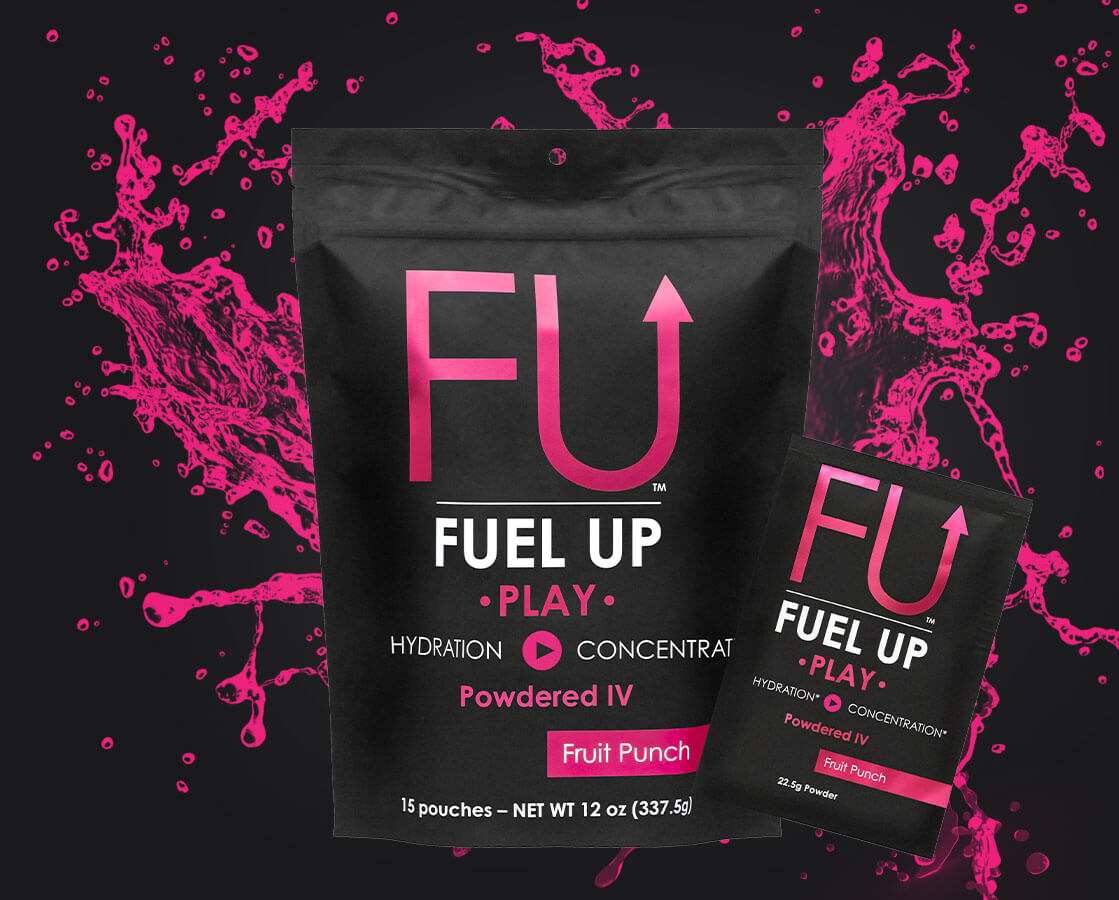
FUEL UP PLAY is a state-of-the-art hydration formulation that contains a proprietary blend of nutrients along with antioxidants and electrolytes to keep a body properly hydrated. Provided in a convenient powder pack to mix in a bottle of water, the fast-acting ingredients of FUEL UP PLAY will help your body maintain hydration and antioxidant & electrolyte balance for peak performance.
Electrolytes are minerals that carry an electric charge and are essential to cellular functioning. Found in most bodily fluids, these minerals are lost through sweating and urination. This loss is multiplied when a person is under stress, has a poor diet, and/or consumes an excess of caffeine and alcohol. Electrolytes such as potassium, sodium, and magnesium help maintain the volume of water inside cells and blood vessels. Maintaining cell water volume promotes proper nerve and muscle function.2,3,4
Americans consume too much sodium and not enough potassium and this is a public health concern.5
Potassium is essential for heart function and muscle contraction. Potassium, along with sodium, serves to maintain critical fluid balance within the body. It conserves calcium within the body and reduces urinary calcium loss. Potassium decreases bone breakdown and stimulates new bone formation. A decrease in blood pressure is associated with high dietary potassium. Additionally, potassium can positively influence vascular smooth muscle and sympathetic nervous system cell function.s.1
This is why FUEL UP PLAY contains 6 times the amount of potassium as it does sodium.
Sodium chloride is an essential compound our body uses to absorb and transport nutrients, maintain blood pressure, maintain the right balance of fluid, transmit nerve signals, and contract and relax muscles.8
Magnesium is a cofactor in more than 300 enzyme systems that regulate diverse biochemical reactions in the body, including protein synthesis, muscle and nerve function, blood glucose control, and blood pressure regulation.
Magnesium is required for energy production, oxidative phosphorylation, and glycolysis. It contributes to the structural development of bone and is required for the synthesis of DNA, RNA, and the antioxidant glutathione.
Magnesium also plays a role in the active transport of calcium and potassium ions across cell membranes, a process that is important to nerve impulse conduction, muscle contraction, and normal heart rhythm.9
Antioxidants are substances that can prevent or slow damage to cells caused by free radicals (waste substances produced by cells). If the body is unable to process and remove free radicals efficiently, oxidative stress can result. Oxidative stress has been linked to heart disease, cancer, arthritis, stroke, respiratory diseases, immune deficiency, emphysema, Parkinson's disease, and other inflammatory or ischemic conditions. Antioxidants help neutralize free radicals in our bodies and protect against the cell damage that free radicals cause.10
Vitamin C is needed by the body to form collagen and make skin, tendons, ligaments and blood vessels. It also uses this vitamin to repair and maintain cartilage, bones and teeth, to heal wounds and to form scar tissue. Vitamin C is a vital antioxidant that helps protect cells from damage caused by free radicals that we are exposed to in the environment such as air pollution, cigarette smoke and ultraviolet light from the sun. Vitamin C plays an important role in immune function.11
Vitamin E functions mainly as an antioxidant to help protect cells from damage caused by free radicals. Vitamin E also helps protect eyesight. Vitamin E supplementation significantly enhances both cell-mediated and humoral immune functions in humans.12 Vitamin E is a fatsoluble antioxidant that stops the production free radicals when fat undergoes oxidation.13
In addition to various amino acids, several B vitamins, including niacin (B3), Vitamin B6, pantothenic acid (B5), and cobalamin (B12) are needed as cofactors for the synthesis of neurotransmitters. B Vitamins play a role in cellular functioning, act as co-enzymes in a vast array of catabolic and anabolic enzymatic reactions. Collectively their effects are necessary for numerous aspects of brain function, including energy production, DNNRNA synthesis/repair, and the synthesis of numerous neurochemicals and signaling molecules.14
Vitamin B3 (niacin) has an established role in the modulation of inflammatory cascades.14
Vitamin B3 has a wide range of uses in the body, helping functions in the digestive system, skin and nervous system. Like other B vitamins, B3 helps the body break down carbohydrates, fats and proteins into energy.15
Vitamin B5 is important for the synthesis of coenzyme A (CoA), which contributes to the structure and function of brain cells by helping synthesize cholesterol, amino acids, phospholipids, and fatty acids. Pantothenic acid, via CoA, is also involved in the synthesis of multiple neurotransmitters and steroid hormones.14 CoA is also responsible for fatty acid synthesis and degradation.16
Vitamin B6 helps support adrenal function, helps calm and maintain a healthy nervous system, and is necessary for key metabolic processes. Vitamin B6 acts as a coenzyme in the breakdown and utilization of carbohydrates, fats and proteins. Vitamin B6 helps in the production of neurotransmitters, the chemicals that allow brain and nerve cells to communicate with one another, ensuring that metabolic processes such as fat and protein metabolism run smoothly.17
Vitamin B12 benefits mood, energy level, memory, heart, skin, hair, digestion and more. It is also an essential vitamin for addressing adrenal fatigue, multiple metabolic functions - including enzyme production, DNA synthesis and hormonal balance-and maintaining healthy nervous and cardiovascular systems. plays a significant role in nerve function, the formation of red blood cells, and the production of DNA.18
Vitamin A is a micronutrient involved in the development of the immune system and plays regulatory roles in cellular immune responses and humoral (bodily fluid) immune processes.19 Vitamin A is important for healthy vision, skin, bones and other bodily tissues. Through its role with cell growth and division, vitamin A has an important role in the normal formation and maintenance of the heart, lungs, kidneys and other vital organs. Other functions of vitamin A include the formation and maintenance of teeth, bones, soft tissue, white blood cells, the immune system and mucus membranes.20
Ginger aids in digestion and assists in the body's anti-inflammatory response.21
According to the Merck Index, glucuronolactone is an important structural component of nearly all connective tissues and is also a detoxicant.22
L-cysteine may help prevent exercise-induced overproduction of free radicals.23
L-carnitine plays a crucial role in the production of energy by transporting fatty acids into your cells' mitochondria.24
1. Panagos A. Dehydration is ruining your health and you don’t even know it. HealthcareExtreme September 11, 2018. https://healthcareextreme.com/dehydration-is-ruining-your-health-and-you-dont-even-know-it/
2. Arneson W. Electrolytes: The Salts of the Earth. Lab Medicine. 2014;45(1):e11-e15. https://academic.oup.com/labmed/article/45/1/e11/2657861
5. Dietary Guidelines Advisory Committee. 2015. Scientific Report of the 2015 Dietary Guidelines Advisory Committee: Advisory Report to the Secretary of Health and Human Services and the Secretary of Agriculture. U.S. Department of Agriculture, Agricultural Research Service, Washington, DC. https://health.gov/dietaryguidelines/2015-scientific-report/
6. Weaver CM. Potassium and health. Advances in Nutrition. 2013;4(3):368S–77S. Published 2013 May 6. https://www.ncbi.nlm.nih.gov/pmc/articles/PMC3650509/
8. Zhang Y, Xun P, Wang R, Mao L, He K. Can Magnesium Enhance Exercise Performance? Nutrients. 2017;9(9):946 https://www.ncbi.nlm.nih.gov/pmc/articles/PMC5622706/
9. Pham-Huy LA, He H, Pham-Huy C. Free radicals, antioxidants in disease and health. International Journal of Biomedical Science. 2008;4(2):89–96. https://www.ncbi.nlm.nih.gov/pmc/articles/PMC3614697/
11. Rizvi S, Raza ST, Ahmed F, Ahmad A, Abbas S, Mahdi F. The role of vitamin e in human health and some diseases. Sultan Qaboos University Medical Journal. 2014;14(2):e157–e165. https://www.ncbi.nlm.nih.gov/pmc/articles/PMC3997530/
13. Kennedy DO. B Vitamins and the Brain: Mechanisms, Dose and Efficacy—A Review. Nutrients. 2016;8(2):68. https://www.ncbi.nlm.nih.gov/pmc/articles/PMC4772032/
14. Laquale KM. B-Complex vitamins’ role in energy release. Movement Arts, Health Promotion and Leisure Studies Faculty Publication, Paper 25. 2006. https://vc.bridgew.edu/cgi/viewcontent.cgi?referer=https://www.google.com/& httpsredir=1&article=1029&context=mahpls_fac
17. O’Leary F, Samman S. Vitamin B12 in health and disease. Nutrients. 2010;2(3):299–316. https://lpi.oregonstate.edu/mic/vitamins/bitamin-B12
18. Huang Z, Liu Y, Qi G, Brand D, Zheng SG. Role of Vitamin A in the Immune System. Journal of Clinical Medicine. 2018;7(9):258. https://www.ncbi.nlm.nih.gov/pmc/articles/PMC6162863/
20. Bode AM, Dong Z. The Amazing and Mighty Ginger. In: Benzie IFF, Wachtel-Galor S, editors. Herbal Medicine: Biomolecular and Clinical Aspects. 2nd edition. Boca Raton (FL): CRC Press/Taylor & Francis; 2011. Chapter 7. https://www.ncbi.nlm.nih.gov/books/NBK92775/
21. Merck Index 11th edition: an encyclopedia of chemicals, drugs, and biologicals. Ed. Susan Budavari. Rahway, NJ: Merck and Co., 1989.
22. Kerksick C, Willoughby D. The antioxidant role of glutathione and N-acetyl-cysteine supplements and exercise-induced oxidative stress. Journal of the International Society of Sports Nutrition. 2005;2(2):38–44. https://www.ncbi.nlm.nih.gov/pmc/articles/PMC2129149/
23. Fielding R, Riede L, Lugo JP, Bellamine A. L-Carnitine Supplementation in Recovery after Exercise. Nutrients. 2018;10(3):349. https://www.ncbi.nlm.nih.gov/pmc/articles/PMC5872767/
